
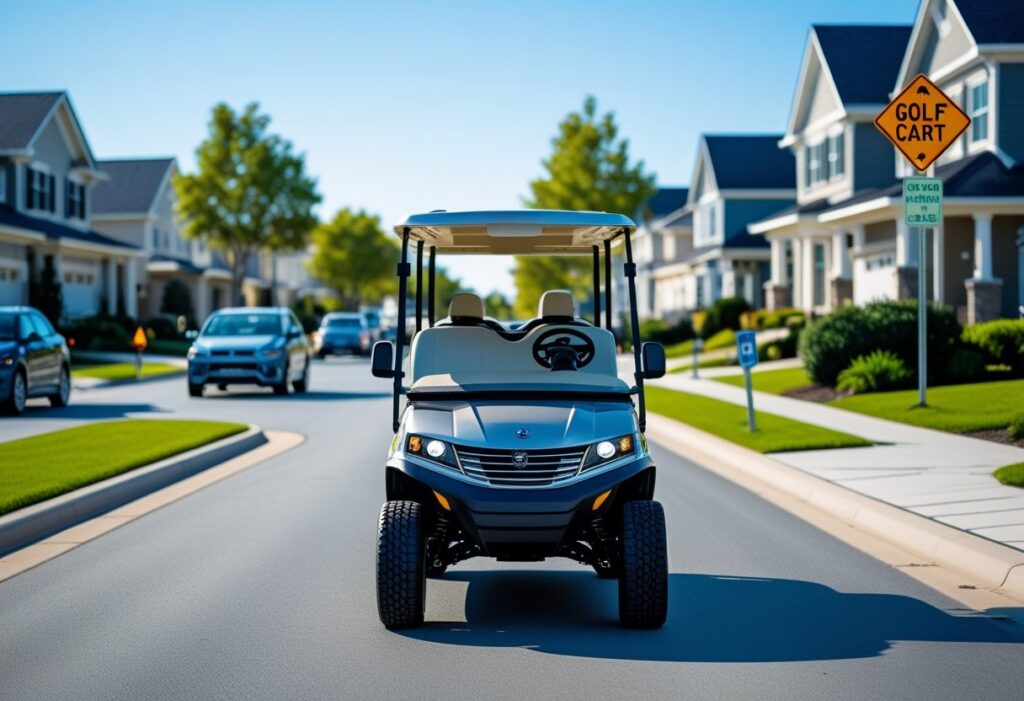
Driving a golf cart on public roads can be convenient, but the rules vary widely by state and community. Many areas require specific safety equipment and legal classifications before a cart can operate outside private property or golf courses.
Cricket Carts Direct supports users by offering portable, collapsible electric carts that may be upgraded for compliant road use. Their lightweight designs allow easy travel and storage while keeping street-use questions top of mind for many owners.
This guide explains when golf carts are allowed on roads, what safety features are required, and how to meet local laws. You’ll learn how regulations differ, what qualifies as a Low-Speed Vehicle, and how to avoid penalties while driving safely.
Legal Requirements to Drive Golf Carts on the Road
To drive a golf cart on public roads, you must follow specific legal rules. These rules cover where you can drive, who can drive, and how to register and insure your golf cart. Knowing these details helps you stay safe and compliant.
State and Local Regulations
Each state and many local governments decide where golf carts can be driven on public roads. Usually, golf carts are allowed only on roads with speed limits of 25 mph or less. Some areas require the roads to be officially designated for golf cart use.
Before driving, check if your city or county has special rules. You may need to stay off busy highways or use your cart only during daylight. Some places require safety features like headlights, brake lights, and turn signals to be street legal.
Age and Licensing Rules
The minimum age to drive a golf cart on public roads varies by state, but often you must be at least 16 years old. Some places require a valid driver’s license, while others allow you to operate a golf cart with a permit or no license at all.
If you have a license, it must be valid and not suspended. Certain areas may require golf cart drivers to follow the same rules as those for cars, including wearing seat belts.
Insurance and Registration
In many states, you must register your golf cart with the Department of Motor Vehicles (DMV) to drive it on public roads. Registration includes paying a fee and displaying a license plate on your cart.
Insurance may also be required. Some states demand liability coverage in case of accidents. Check your local rules for insurance limits and registration steps. Without proper registration and insurance, you could face fines or penalties.
Types of Roads Golf Carts Can Use
You can drive golf carts on certain roads depending on their safety features and local rules. Knowing where you can legally operate your cart helps avoid tickets or unsafe situations. This includes public roads, restricted streets, and private property.
Permitted Public Roads
You can drive golf carts on public roads only if they meet safety standards. Many states allow golf carts classified as Low-Speed Vehicles (LSVs) on roads with speed limits of 35 mph or lower. These carts must have headlights, taillights, turn signals, mirrors, seatbelts, and a Vehicle Identification Number (VIN).
Neighborhoods, retirement communities, and some rural areas often permit golf carts on these slow streets. You may also need a driver’s license. Check local laws for registration, insurance, or special license requirements.
Prohibited Roadways
Golf carts are not allowed on highways or roads with speed limits over 35 mph. Heavy traffic, multiple lanes, or high-speed limits pose safety risks because golf carts cannot keep up with regular traffic.
Many cities ban golf carts from commercial streets, divided highways, and major thoroughfares to protect both drivers and pedestrians. Using a golf cart in these areas can lead to fines or impoundment.
Private Property Rules
You have more freedom to use your golf cart on private property, such as gated communities, resorts, campgrounds, golf courses, and large estates. Here, your cart usually does not need special permits or safety modifications.
However, property owners or managers may set their own rules on speed and paths. Always follow these rules to avoid conflicts or damage.
Golf Cart Modifications and Safety Features
To drive a golf cart on public roads, you must add specific safety features and ensure it complies with speed limits. These changes make your cart safer and legal for street use.
Required Equipment for Road Use
Your golf cart needs certain equipment to qualify as a Low-Speed Vehicle (LSV), including:
- Headlights and taillights for visibility during night or low-light conditions
- Turn signals to indicate your intentions
- Mirrors (side and rearview) to see traffic behind and beside you
- Windshield and windshield wipers for weather protection
- Seat belts for driver and passengers
- Reflectors to increase visibility
Your cart must also have a Vehicle Identification Number (VIN) and be registered with the DMV. Insurance is often required, depending on your state. These modifications help meet necessary safety standards.
Speed Limit Adjustments
Most street-legal golf carts are limited to speeds between 20 and 25 mph, which suits roads with speed limits of 35 mph or less.
You may need to adjust your cart’s speed to meet these limits. Some carts come with factory settings, while others need a governor or speed limiter device. Driving within the speed limit keeps you and others safer on the road.
How Battery Performance Affects Road-Use Safety
Battery capability influences a cart’s consistent speed, stopping power, and reliability in traffic. According to the U.S. Department of Energy, lithium batteries support stronger power output and better efficiency, which improves performance during longer or uphill routes.
Steady power reduces strain on critical components and supports smoother acceleration, helping carts maintain safe speeds in areas with light vehicle traffic. Better energy density also supports extended range without compromising handling.
Considering battery performance before modifying for road use ensures a safer experience and supports any required lighting or signaling accessories. It also helps your cart remain dependable during daily travel.
Differences Between Golf Carts and Low-Speed Vehicles
Understanding the differences between golf carts and low-speed vehicles (LSVs) is important before deciding which to drive on the road. These vehicles vary in design, speed, safety features, and legal status, affecting where and how you can use them.
Definition and Classifications
A golf cart is a small electric or gas-powered vehicle mainly for golf courses, usually with a top speed of about 15 mph. Golf carts lack many safety features needed for street driving, such as seat belts, turn signals, and headlights.
A low-speed vehicle (LSV) is built for roads with speed limits up to 35 mph and can reach speeds of 20 to 25 mph. LSVs include essential safety equipment like headlights, brake lights, turn signals, mirrors, windshields, and seat belts, making them suitable for neighborhoods and low-speed streets.
Legal Implications
You generally cannot drive a golf cart on public roads unless specific local laws allow it, usually with restrictions. Golf carts often cannot be driven on busy streets or highways due to safety and speed limits.
LSVs are street legal under federal law if they meet safety standards. You must register and insure an LSV before driving it on public roads. States may require a driver’s license to operate an LSV, and speed limits for these vehicles usually cap at 25 mph.
If you need a vehicle for road use in areas with speed limits up to 35 mph, an LSV is the safer, legal choice compared to a golf cart.
Penalties for Illegal Use of Golf Carts on Roads
Using a golf cart on public roads without following the law can lead to serious consequences. You may face fines and citations, and these violations could also affect your driving record.
Fines and Citations
If you operate a golf cart on roads where it is not allowed or without proper registration, you can be fined. Typical fines range from $50 to $200, depending on the state and the severity of the offense. Each day you continue to drive illegally can count as a separate violation, so fines can add up quickly.
Law enforcement treats illegal golf cart use similarly to driving an unregistered or illegal motor vehicle. You might receive a traffic ticket that requires you to appear in court. These penalties discourage driving golf carts on public streets without the necessary modifications and approvals.
Impact on Driving Record
Illegal golf cart use can also affect your driving record. Depending on local laws, traffic violations related to golf carts might be reported to the DMV. This could lead to points on your driver’s license, which may increase your insurance rates.
If you repeatedly violate rules about golf cart use, you can face harsher penalties, including license suspension. Some states consider driving a non-compliant golf cart a serious offense because it poses safety risks on public roads.
Best Practices for Driving Golf Carts on Public Roads
Driving a golf cart on public roads requires more care than driving it on a golf course. You must focus on safety gear, vehicle readiness, and understanding how to coexist with faster, larger vehicles.
Safety Guidelines
Always make sure your golf cart meets local legal requirements before hitting the road. This usually means having working headlights, taillights, and turn signals. Wearing a seatbelt is crucial if your cart is equipped with one.
Drive at safe speeds—generally 20-25 mph is the limit for street-legal golf carts. Check tire pressure and brakes before every trip to avoid mechanical problems. Use hand signals or turn signals when turning or stopping so other drivers know your intentions.
Never drive under the influence or use your phone while driving. Stay alert and watch for pedestrians, cyclists, and other obstacles. Keeping your golf cart well-maintained helps ensure a safer ride every time.
Sharing the Road with Other Vehicles
Golf carts move more slowly than most vehicles, so always stay to the right to let cars pass safely. Be patient and avoid blocking traffic on busier streets. Use caution at intersections and always obey traffic lights and stop signs.
Keep an eye on your mirrors and blind spots before merging or turning. Avoid driving on high-speed roads or highways as golf carts are not built for fast traffic.
Choose routes with lower speed limits under 35 mph to reduce risks. Stay predictable by signaling and following all traffic laws. Being courteous and cautious helps you share the road smoothly with cars, trucks, and bikes.
Community Rules and Homeowner Association Policies
When driving a golf cart on roads in your community, you need to follow the rules set by your Homeowner Association (HOA). These rules often cover where, when, and how golf carts can be driven within the neighborhood.
HOAs may limit golf cart use to certain streets or areas for safety reasons. Some communities allow carts only on private roads but not on busy or public streets. It’s important to check your HOA’s specific guidelines before driving.
Speed limits for golf carts within the community.
Required safety equipment, such as lights and turn signals.
Registration or insurance rules for golf cart owners.
Designated parking or storage areas for carts.
Golf carts must follow traffic signs and signals just like regular vehicles. Your HOA enforces these rules to keep all residents safe.
By understanding and following your community’s policies, you can enjoy the convenience and freedom of driving your golf cart safely. Always review any HOA updates or notices that might affect how and where you can use your cart.
Environmental and Practical Considerations
Golf carts offer an environmentally friendly alternative to gas-powered vehicles. Electric carts produce zero emissions, making them a smart option for reducing your carbon footprint. Many communities prefer them for clean, quiet transportation.
Before using a golf cart on the road, consider practical limitations. Most standard carts need modifications, such as headlights, turn signals, and seat belts, to become street-legal. Local rules can differ, so always check the regulations in your area.
Your golf cart choice affects convenience and storage. Compact, collapsible models save space and make transport easier. For example, a collapsible cart fits into RV bins or small SUVs, so you can take it on trips without hassle.
Key benefits to weigh:
- Portability: Easier to store and transport
- Range: Lithium battery options provide a longer travel distance
- Speed: Street-legal carts can go up to 15 mph or more
Assess where and how you plan to use your cart. If you need it around a community or large property, portability and quiet operation offer major advantages. Always check local rules to ensure safe and compliant use on public roads.
Staying Safe and Legal When Driving a Golf Cart on Public Roads
Understanding when and how a golf cart qualifies for road use helps you drive safely and avoid legal issues. Reviewing safety equipment, roadway rules, and vehicle classifications ensures every trip is compliant and confident.
Cricket Carts Direct offers portable electric carts that can be upgraded with safety features, helping owners meet required guidelines while keeping storage and travel simple. Their designs support everyday convenience without sacrificing reliability.
Before driving on public roads, confirm local laws, consider necessary upgrades, and review best practices for visibility and speed control. Build your Cricket today and enjoy a cart ready for safe travel wherever allowed.
Frequently Asked Questions
Can you drive a golf cart on public roads?
You can drive a golf cart on public roads only when it meets the required safety features and follows local rules. Many areas limit golf carts to roads under 35 mph and require proper lighting, mirrors, and registration.
What safety features are required for street-legal golf carts?
Street-legal carts typically need headlights, taillights, turn signals, mirrors, seat belts, a windshield, and a Vehicle Identification Number. These features help the cart meet Low-Speed Vehicle standards.
Do you need a license or insurance to drive a golf cart on the road?
Some states require a valid driver’s license, liability insurance, and DMV registration before operating a golf cart on public roads. Rules vary by region, so always review local guidelines.
