
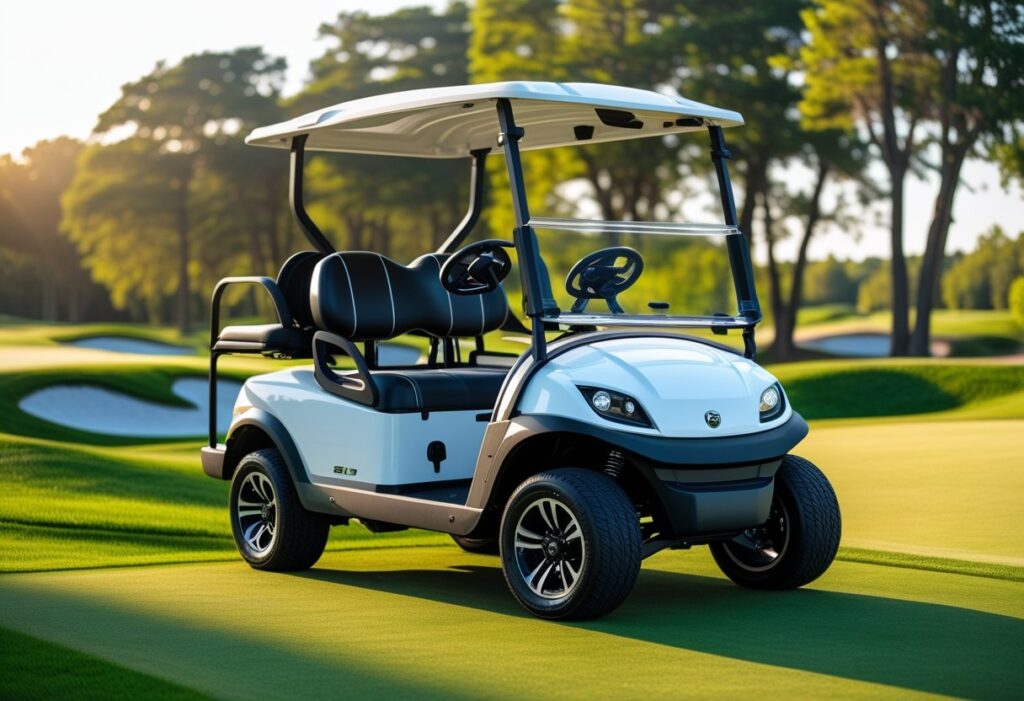
If you’re wondering how fast a golf cart can go, you’ll find that most lightweight electric carts reach comfortable speeds that fit daily travel and recreation. This guide explains how design, power, and driving conditions shape your cart’s top speed with clarity and simplicity.
Cricket Carts Direct offers portable, collapsible electric carts built for smooth travel and dependable performance. Their lightweight frames and efficient batteries help you move confidently, whether you’re exploring campgrounds, properties, or residential paths.
In the sections ahead, you’ll learn what affects golf cart speed, how legal limits apply, and which upgrades can safely improve performance. You’ll also see how terrain, weight, and maintenance play essential roles in keeping your cart fast and reliable.
Typical Golf Cart Speeds
Golf carts usually have set speed ranges based on their design, power source, and factory settings. Understanding these speeds helps you pick the right cart for your needs and know what to expect from your ride.
Average Manufacturer Speeds
Most golf carts come with top speeds between 12 and 18 miles per hour. Standard electric models typically run around 12 to 14 mph. Some newer or upgraded gas-powered carts can reach closer to 18 mph.
Your choice between a basic or a performance-focused model affects speed. Higher speeds often mean shorter battery life or less smooth rides on rough terrain. Most models perform reliably within these average speed ranges without modifications.
Differences Between Electric and Gas Models
Electric golf carts run quieter and have steady acceleration but tend to have lower top speeds, around 12 to 15 mph. Their maximum speed depends on battery power and motor size.
Gas-powered carts usually reach higher top speeds, about 15 to 18 mph, thanks to more powerful engines. They refuel faster but require more maintenance. Electric carts offer better efficiency and simpler operation if speed under 15 mph meets your needs.
Speed Limiters and Factory Settings
Manufacturers set speed limits on golf carts for safety and legal reasons. Speed limiters keep speeds within a safe range, usually no more than 15 mph.
Factory settings balance speed with control and battery life. While some carts can be modified for higher speeds, this increases safety risks and wear on the vehicle. If you want dependable speed without extra adjustments, factory settings provide a consistent and secure experience.
Legal Limits and Regulations
Golf carts must follow specific rules about how fast they can go and where they can be driven. These rules depend on whether the cart is street legal, the area where you’re driving, and the laws set by your state or local government.
Street-Legal Speed Requirements
To be street legal, your golf cart usually needs to stay under certain speed limits. Most street-legal golf carts can drive at speeds between 15 and 25 miles per hour. This range helps ensure safety for you and other drivers.
Street-legal carts must also meet basic safety requirements like having lights, mirrors, and seat belts. These carts can be driven on roads with speed limits up to 35 mph, but their top speed should not exceed the set limit for street legal use.
Golf Course Speed Limitations
On golf courses, speed limits are often lower than on roads. Typically, the allowed speed is between 12 and 15 miles per hour. This keeps players safe and protects the course grounds from damage caused by fast driving.
Driving slower also reduces noise and helps avoid accidents on narrow paths and near pedestrians. Control your golf cart’s speed carefully to follow the course’s posted rules.
State and Local Laws
State and local laws can vary widely. Some places allow golf carts on public roads, while others limit their use to private areas or golf courses only.
You might need to register your cart, get insurance, or have a driver’s license to operate it legally. Age limits may also apply, with some states requiring drivers to be at least 14 or 16 years old.
Because rules differ, check your local government’s regulations before driving your golf cart on public roads. Staying informed helps you stay safe and legal.
Upgrading Golf Cart Speed
You can improve your golf cart’s speed by making smart changes to key parts. Adjusting the motor, controller, tires, or gears can increase performance without harming safety or durability
Why Battery Voltage Impacts Acceleration
Battery voltage determines how much power your golf cart can access during acceleration and high-speed travel. According to the U.S. Environmental Protection Agency, higher-voltage electric systems deliver stronger torque and more efficient energy output, improving speed and hill-climbing capability.
This is why lithium systems often support faster, smoother acceleration. Understanding voltage helps you select upgrades that balance performance with safe operation, especially if you drive in hilly or high-load conditions.
Performance Modifications
Performance upgrades often focus on weight reduction and tuning. Removing extra weight from your cart helps it accelerate faster and reach higher speeds.
Modifying or fine-tuning the engine or electric system can also boost power. For example, improving battery quality or renovating motor components increases efficiency.
Upgrades should comply with local speed regulations for street or course safety. Small changes to suspension or brakes can complement speed upgrades by improving control.
Controller and Motor Upgrades
Upgrading the speed controller can raise your cart’s top speed by allowing the motor to run faster. A more powerful motor with higher horsepower (HP) and revolutions per minute (RPM) increases overall speed and responsiveness.
Use OEM parts designed for your cart model to maintain reliability. These upgrades can push electric carts from typical speeds of around 12-15 mph to closer to 17 mph or more.
Advanced lithium batteries can support these upgrades by providing better power output and longer runtime on a single charge.
Tire and Gear Changes
Changing tires to larger or low-resistance models reduces rolling drag, helping your cart move faster. Choose wheels suited to both speed and terrain where you use your cart.
Adjusting gear ratios through sprocket or differential replacements can increase speed but may reduce acceleration or torque. Balance these changes to keep your cart running smoothly while enhancing speed. Always verify that new gear and tire setups fit safely and maintain control.
Factors Affecting Golf Cart Performance
Your golf cart’s speed and efficiency depend on several key elements. These include how much weight it carries, the type of ground you drive on, and the power delivered by the battery. Understanding these factors helps you get the best from your golf cart.
Weight and Passenger Load
The total weight your golf cart carries includes passengers, cargo, and any accessories. More weight means the motor must work harder, which lowers your cart’s speed and reduces battery life. For example, if your cart can carry 600 pounds but you pack it close to that limit, expect slower acceleration and shorter range.
Keeping the load balanced is important, too. Uneven weight can affect how smoothly your cart moves and handles. Lighter carts, designed for one or two people, tend to perform faster and use less power. Consider how many people and what gear you usually carry to choose the right model for your needs.
Terrain and Surface Types
The ground where you drive greatly affects your golf cart’s performance. Smooth, flat surfaces like paved paths allow your cart to reach higher speeds with less effort. In contrast, rough or hilly terrain, such as dirt trails or grass, requires more power and slows you down.
Steeper hills put extra strain on the motor and battery. The cart works harder to climb, which can cut your battery life by a noticeable amount. Tire type and size also play a role here—larger tires improve traction on rough surfaces but may slightly reduce top speed on smooth ground.
Battery Life and Power Output
Battery voltage and condition directly impact speed and distance. Higher voltage systems, like 48V or upgraded lithium batteries, provide more power for faster speeds and longer drives. Standard lead-acid batteries typically have shorter run times and lower top speeds.
Battery health matters too. If your battery is old or not fully charged, your golf cart won’t reach its full speed potential. Upgrading to lithium batteries is a smart option if you want faster speeds up to 13 mph and extended range—some models offer up to 70 miles per charge. Proper charging habits and maintenance keep your battery performing well.
Safety Considerations at Higher Speeds
When your golf cart moves faster, controlling it well becomes more important. You need to stop safely and keep the cart stable to avoid accidents. Paying attention to these issues helps protect you and others.
Braking Distance
As speed increases, your golf cart will take longer to stop. Stopping distance grows with speed, so you need more space to brake safely.
Always allow extra room between your cart and any obstacles or pedestrians. Wet or uneven surfaces can also increase braking distance. Regular maintenance, like checking brake pads and adjusting them when needed, keeps stopping power reliable.
Use the built-in brakes properly and avoid overloading the cart. Overloaded carts reduce braking effectiveness, making it harder to stop quickly. Stay alert and slow down if conditions aren’t ideal.
Stability and Handling
Higher speeds affect how stable your golf cart feels. Rapid turns or uneven ground can cause tipping or loss of control. Stability depends on your cart’s design and how you drive it.
Drive smoothly at speeds up to 13 to 17 mph, and avoid sudden moves. Keep your speed steady on rough terrain and slow down before sharp turns.
Adding accessories like wider tires or seat belts can improve stability and safety. Be mindful of passengers and weight distribution, as uneven loads increase the risk of tipping. Properly folded and maintained, your cart offers reliable control for safe rides at higher speeds.
Comparing Golf Cart Speed to Other Vehicles
Golf carts generally move more slowly than most motor vehicles, but they offer unique advantages like portability and ease of storage. Understanding how their speeds stack up against utility vehicles and low-speed vehicles can help you choose the right fit for your needs.
Golf Carts vs. Utility Vehicles
Utility vehicles (UTVs) are designed for heavier work and rough terrain. They typically reach speeds of 30 to 50 mph or higher, faster than most golf carts. Standard golf carts usually top out at around 13 to 17 mph.
This lower speed makes golf carts safer for short trips on golf courses, campgrounds, or in neighborhoods with slow traffic. Unlike utility vehicles, golf carts are lightweight and easily collapsible. You can fold a compact cart to fit inside tight spaces, RV bins, or small SUVs, which is not possible with bulkier UTVs.
Golf Carts vs. Low-Speed Vehicles
Low-speed vehicles (LSVs) are street-legal electric or gas-powered cars limited to 25 mph. They offer faster travel than golf carts while staying safe in neighborhoods and gated communities. Most golf carts reach up to about 17 mph, which is slower than most LSVs.
While LSVs provide more speed and seating, they lack the portability of a collapsible golf cart. A foldable cart stores easily for travel or quick errands. The trade-off is lower speed, but you gain convenience and simple handling.
Maintenance for Optimal Speed
To keep your golf cart running smoothly and maintain its top speed, regular maintenance is key. Check tire pressure often. Properly inflated tires reduce rolling resistance and help your cart move faster and more efficiently.
Keep the battery charged and clean. If your cart uses standard batteries, maintain them according to the manufacturer’s instructions. Upgrading to a lithium battery can improve both speed and range, with less frequent charging needed.
Inspect brakes and cables regularly. Worn brakes or loose cables can slow your cart and affect performance. Keep all moving parts lubricated and clear of dirt or debris for smooth operation.
Check motor connections for tightness and corrosion. Any loose or dirty connections can reduce power delivery to the wheels, slowing your cart down.
Finally, keep your cart clean and free of excess weight. Extra items or heavy loads can reduce speed and strain the motor over time. Lightweight, foldable models help you maintain speed without extra effort.
Adopting these simple upkeep tasks protects your investment and lets you enjoy fast, reliable rides. With proper care, your golf cart will perform at its best every time you take it out.
Summary of Golf Cart Speed Capabilities
Golf carts usually run between 12 and 15 miles per hour. Most standard models for golf courses and personal use perform consistently at these speeds without any changes.
Street-legal golf carts, also known as Low-Speed Vehicles (LSVs), can reach speeds up to 25 miles per hour. Manufacturers design these carts for roads with speed limits of 35 mph or less, adding safety features like seat belts and lights.
Upgrading motors or batteries can increase a golf cart’s speed beyond factory limits. However, these modifications may impact safety, durability, and legal compliance.
Here’s a quick overview of speed types:
| Golf Cart Type | Typical Speed Range | Notes |
| Standard Golf Cart | 12–15 mph | Best for golf courses and personal areas |
| Street-Legal (LSV) | Up to 25 mph | Road approved with safety gear |
| Modified/Performance | Above 25 mph | May void warranty; legal risks |
Choose a golf cart that fits your needs for convenience and safety. Some portable and lightweight models offer speeds up to 13–17 mph, balancing power with easy travel.
Smarter Choices for Safe, Reliable Golf Cart Speed
Choosing a golf cart with balanced speed, power, and stability ensures smooth travel whether you’re on a course, campground, or neighborhood path. Knowing how terrain, weight, and motor output affect performance helps you ride confidently and safely.
Lightweight, collapsible carts from Cricket Carts Direct offer dependable speed with easy storage, fast setup, and strong battery performance. Their compact design gives you reliable handling and comfortable travel across many environments.
To get the best results from your cart, keep up with maintenance, choose upgrades wisely, and follow local guidelines. When you’re ready for dependable mobility wherever you go, reach out and build your Cricket today.
Frequently Asked Questions
How fast does a standard golf cart go?
Most standard electric golf carts travel between 12 and 15 miles per hour. This speed range works well for golf courses, neighborhoods, and private properties where steady, controlled movement is important.
What affects a golf cart’s top speed?
A golf cart’s top speed depends on several factors, including battery voltage, motor power, terrain, tire type, and the total weight being carried. Each of these elements influences how easily the cart can accelerate and maintain speed.
Can a golf cart legally go faster than 20–25 mph?
Golf carts can only exceed 20 to 25 mph if they meet the federal definition of a Low-Speed Vehicle (LSV). LSVs require safety equipment such as headlights, mirrors, reflectors, and seat belts. They may be driven on approved roads with speed limits typically up to 35 mph.
How can I make my golf cart go faster?
You can increase your golf cart’s speed by upgrading the motor, installing a higher-capacity controller, switching to higher-voltage or lithium batteries, or changing tire size and gear ratios. Each upgrade should be done safely and in compliance with local laws.
Do lithium batteries make a golf cart faster?
Yes. Lithium batteries provide stronger, more consistent power output, which improves acceleration and allows carts to maintain higher speeds more easily. Many carts equipped with lithium batteries reach speeds between 13 and 17 mph.
Why is my golf cart slowing down?
Golf carts often slow down due to low voltage, aging batteries, worn cables, low tire pressure, heavy loads, or mechanical issues. Regular inspection of the battery, wiring, and tires helps maintain speed and performance.
Is it safe to drive a golf cart at higher speeds?
Driving at higher speeds is safe when the cart is properly maintained and operated responsibly. Stability, braking distance, and load distribution all matter more as speed increases. Keeping tires inflated, brakes tuned, and loads balanced helps ensure safe travel.
