
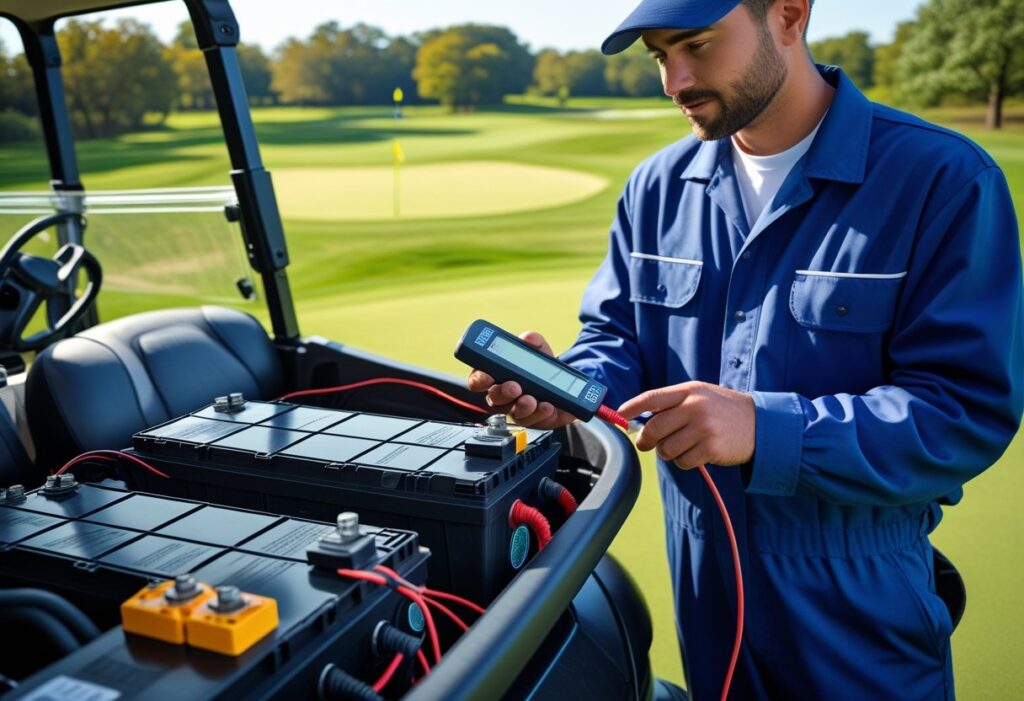
Golf cart batteries determine how far, how fast, and how reliably your cart performs each day. Their lifespan depends on chemistry, charging habits, and how often the cart is used, making smart care essential for long-term value.
At Cricket Carts Direct, we focus on dependable electric mobility built around efficient batteries that balance range, power, and simple upkeep. Our collapsible carts rely on modern systems that stay lightweight while delivering consistent performance.
In this guide, you’ll learn how long golf cart batteries last, what affects their lifespan, and how to maintain them for maximum durability. You’ll also see the differences between battery types and how to plan for replacements with confidence.
Typical Battery Lifespan in Golf Carts
Golf cart battery life varies by battery type, usage, and care. Knowing how long batteries last and when to replace them helps you avoid unexpected stops and saves money.
Average Years of Use
Most golf cart batteries last between 3 and 6 years, depending on the type you use. Standard lead-acid batteries typically give you about 3 to 5 years of service. AGM batteries last slightly longer, from 4 to 6 years. Lithium batteries often last 8 to 12 years.
Usage and maintenance habits also affect these numbers. Regular charging after each use and storing the battery in a cool, dry place help extend battery life. Poor care and heavy use can shorten it.
Cycles Versus Years
Battery life is also measured in charge cycles. One cycle is a full charge and discharge. Lead-acid batteries usually handle about 1,000 cycles before their capacity drops significantly. Lithium batteries can handle twice that or more.
Cycles affect your battery more than years do. If you use your cart a lot, your battery will wear out faster than if you use it lightly, even in the same time frame. Both years in use and cycle count matter for battery health.
When to Replace Batteries
Replace your golf cart battery when you notice reduced performance, like shorter driving time or slower speeds. If your battery holds less charge or takes longer to recharge, it may be time to swap it out.
Other signs include visible damage, corrosion on terminals, or swelling of the battery case. Waiting too long to replace batteries can damage your cart’s electrical system. Replacing your batteries on time keeps your cart reliable and ready to go.
Key Factors Affecting Battery Longevity
Several key factors determine how long your golf cart battery lasts. The type of battery, how often and how you use the cart, and your charging habits all impact battery life.
Type of Battery Technology
The battery technology in your cart plays a big role in longevity. Most carts come with sealed lead-acid (SLA) or lithium batteries. Lead-acid batteries usually last 3 to 5 years with regular care. Lithium batteries, which are lighter and more efficient, can last up to 10 years or more. Lithium also holds a charge longer and charges faster than lead-acid.
Choosing lithium gives you more range and less maintenance, though it costs more upfront. Your battery’s chemistry affects charging speed, maintenance needs, and durability, making this a key decision for longevity.
Usage Patterns and Driving Habits
How you use your golf cart matters for battery health. Driving long distances or uphill makes the battery work harder and wears it out faster. Short, frequent use causes more charging cycles, which can reduce lifespan, too.
Avoid running your battery below 20% often, since deep discharge stresses its cells. Try to moderate your speed and weight load. Carrying close to your cart’s weight limit demands more from the battery, shortening its time between replacements.
Charging Practices
Proper charging extends battery life. Always use the charger designed for your battery type. Overcharging lead-acid batteries can cause damage, while lithium batteries need protection from over-discharge and overheating.
Charge your battery fully after each use, but avoid leaving it plugged in constantly. Do not fully drain the battery before charging again. Inactive carts should still be charged every few weeks to prevent battery damage. Keeping your battery within recommended voltage and temperature ranges improves its lifespan.
Comparing Battery Types for Golf Carts
Choosing the right battery affects how far and how long your golf cart will run. Different batteries offer varied lifespans, charging needs, and maintenance levels. Understanding these details helps you get the best value and performance from your cart.
Lead-Acid Batteries
Lead-acid batteries are the most common and cost-effective option. They usually last 3 to 5 years, depending on how often you use and maintain them.
You need to recharge them after every use to avoid damage. These batteries may require regular water checks and cleaning to keep them working well. They are heavier and take longer to charge (around 6–8 hours).
Lead-acid batteries deliver steady power but do not last as long or hold charge as well as newer battery types. They work well if you want a budget-friendly solution and don’t mind some upkeep.
Lithium-Ion Batteries
Lithium-ion batteries are lighter and more powerful. They can last 8 to 12 years, which is significantly longer than lead-acid options.
You can charge these batteries in about half the time lead-acid batteries take. They also hold their charge for up to six months without use, making them perfect for occasional riders.
These batteries need little to no maintenance, and they support longer trips with greater range—up to 70 miles per charge on some golf carts. Their upfront cost is higher, but you save time and effort in the long run.
AGM and Gel Batteries
AGM (Absorbent Glass Mat) and gel batteries are a step up from lead-acid batteries. They offer a longer lifespan of 4 to 6 years and handle deep discharges better.
AGM batteries have a low self-discharge rate, so they hold their charge well when not in use. They do not need watering and require less maintenance than lead-acid types.
Gel batteries are similar but use a gel electrolyte, making them resistant to leaks and vibration. Both types cost more than traditional lead-acid batteries but give you a good mix of performance and durability with lower upkeep.
Maintenance Practices to Extend Battery Life
Keeping your golf cart battery healthy requires steady attention to charging and cleaning habits. These steps help you avoid damage and keep your battery working longer.
Proper Charging Methods
Always charge your battery soon after using your golf cart. Leaving it discharged for long periods can shorten battery life. Use the charger designed for your battery type and follow the manufacturer’s instructions carefully.
Avoid overcharging by unplugging the charger once the battery is full. Modern chargers often have automatic shut-off features, but it is good practice to check. Charging in a cool, dry place helps prevent heat damage.
Charging lithium batteries takes less time than lead-acid ones and can extend battery lifespan. For lead-acid batteries, topping off water levels regularly ensures proper function during charging.
Regular Cleaning and Inspection
Dirt, corrosion, and loose connections can reduce battery efficiency and cause early failure. Clean your battery terminals and cables regularly with a baking soda solution to remove corrosion safely.
Check that all cable connections are tight and free of rust. Inspect the battery case for cracks or leaks, which can be signs of damage. If you spot any issues, address them promptly to avoid further problems.
Keep the batteries dry and protect them from theft or damage while storing your collapsible cart. Clean batteries perform better and last longer, ensuring your cart is ready for every adventure.
Signs of Declining Battery Performance
Your golf cart’s battery health directly affects how well it performs during use. You need to watch for clear, specific signs that show when the battery is starting to weaken. These signs can signal that it is time to check, service, or replace your battery.
Decreased Range
If you notice your golf cart is not running as far on a single charge as it used to, this is a strong sign of battery decline. For example, if your cart usually travels 50 miles but now covers only 30 to 35 miles, the battery capacity is dropping.
This may happen because battery cells wear down over time, reducing how much power they store. Environmental factors like extreme temperatures or inconsistent charging can speed up this process. Keeping your battery charged after each ride helps maintain range.
Tracking your usual distances and comparing them to recent trips helps you spot this drop early. A smaller range means less time on the course or fewer miles traveling before needing to stop and recharge.
Slower Acceleration
Slower starts and reduced power when going uphill or carrying heavier loads often point to battery trouble. If your golf cart can no longer accelerate smoothly or reach top speed more slowly, your battery might be losing strength.
This occurs because the battery can’t deliver the same burst of power as when new. You may also find yourself charging more often than before, as low power affects overall performance.
Keep an eye on how your cart responds during normal use, especially under stress like hills or quick starts. Sluggish acceleration means the battery could soon fail to support your daily use.
Environmental and Storage Considerations
Your golf cart’s battery life depends a lot on how you care for it around weather and storage. Proper conditions help keep your battery healthy and ready to go. Understanding how climate and storage affect your battery will let you get the most use from it.
Climate Impact on Battery Life
Extreme temperatures can damage your battery and shorten its life. Heat speeds up chemical reactions inside lead-acid batteries, causing them to wear out faster. Cold slows down the battery’s ability to hold a charge, lowering performance in low temperatures.
Keeping your cart in a shaded or covered area can help protect the battery from direct sun and heat. Avoid leaving your cart in freezing weather for long, especially if you use standard lead-acid batteries. Lithium batteries handle temperature swings better but still perform best in moderate climates.
Off-Season Storage Tips
For the best battery care during off-season storage, keep lithium batteries charged to about 50%. Store them in a dry, cool place, ideally between 32°F and 68°F (0°C to 20°C). Check and recharge your battery every three months to stop deep discharge, which can reduce capacity.
Lead-acid batteries should be fully charged before storage and topped up regularly to prevent sulfation. Disconnect the battery if your cart will not be used for months to avoid slow drains. Using a smart charger or maintainer designed for golf cart batteries is a good way to keep power steady while stored.
Environmental Regulations for Golf Cart Battery Disposal
According to the U.S. Environmental Protection Agency, lead-acid batteries used in most golf carts are classified as hazardous waste if not recycled properly. Returning used batteries to certified recycling centers prevents contamination of soil and groundwater.
Lithium batteries also require specific handling due to fire risks and chemical composition. EPA guidelines recommend transporting them in non-metal containers and covering exposed terminals to prevent shorts.
Following these disposal rules protects the environment and keeps your cart compliant with federal recycling standards.
Cost Implications and Replacement Planning
Understanding the cost and timing of battery replacement helps you avoid surprises and keeps your golf cart running smoothly. Planning ahead ensures you invest wisely and get the most from your battery.
Estimating Replacement Costs
Replacing your golf cart battery typically ranges between $600 and $1,500, depending on the battery type and capacity. Standard sealed lead-acid (SLA) batteries are cheaper upfront but often last 4 to 6 years, while lithium batteries cost more initially but can last up to 10 years or longer.
Consider these cost factors:
- Battery type (lead-acid vs. lithium)
- Battery capacity and range
- Installation fees (if applicable)
- Shipping costs if ordering a replacement battery directly
Choosing a lithium upgrade might cost more initially, but it offers longer life and faster charge times. This saves money by reducing the frequency of replacements and downtime.
Warranties and Battery Lifespan
Your battery’s warranty protects your investment. A lifetime customer care warranty offers peace of mind beyond typical battery warranties.
Battery lifespans depend on the type you use:
- Lead-acid batteries: Last 4-6 years with proper care.
- Lithium batteries: Can last up to 10 years, hold a charge longer, and need less maintenance.
Maintain your battery by charging it regularly, keeping the terminals clean, and storing it in a cool, dry place. Replace lead-acid batteries every 4-6 years, while lithium batteries often last much longer before needing replacement.
Check your battery’s performance regularly to spot signs of aging and plan for timely replacements.
Extend Battery Life With Smart Care and Reliable Power
Proper maintenance keeps your golf cart batteries running longer and performing consistently. Charging correctly, monitoring usage, and storing your cart safely all contribute to a healthier battery system and fewer unexpected replacements.
With Cricket Carts Direct, you get lightweight electric carts engineered to work efficiently with modern battery technology. Our focus on portability, quick charging, and dependable performance helps you enjoy every ride with confidence.
Stay powered year-round with smart maintenance habits. Build your Cricket today and enjoy nationwide delivery in just three days.
Frequently Asked Questions
How do I determine the right voltage for my golf cart batteries?
The correct voltage depends on the golf cart’s motor and electrical system. Most carts use 36-volt or 48-volt setups. Check the manual or count the number of batteries and multiply by each unit’s voltage to confirm total output.
What factors affect how long golf cart batteries last?
Factors include battery type, usage patterns, charging habits, and temperature exposure. Proper charging and regular cleaning extend lifespan, while deep discharges and extreme temperatures shorten it.
How long do different golf cart batteries typically last?
Lead-acid batteries last 3 to 6 years, AGM batteries last 4 to 6 years, and lithium batteries can last 8 to 12 years, depending on care and usage.
When should I replace my golf cart batteries?
Replace your batteries when you notice shorter driving range, slow acceleration, longer charging times, or visible damage such as swelling or corrosion.
How can I extend the lifespan of my golf cart batteries?
Charge after each use, avoid deep discharges, keep terminals clean, inspect cables regularly, and store the cart in a cool, dry place during off-season months.
